
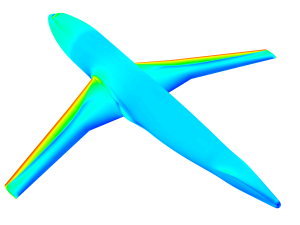
Computational Fluid Dynamics (CFD) is a powerful simulation technique that uses numerical methods to analyze fluid flow, heat transfer, and related phenomena. In this article, we'll explore the fundamentals of CFD and its applications in engineering.
What is CFD?
CFD uses numerical analysis and algorithms to solve and analyze problems involving fluid flows. Computers are used to perform the calculations required to simulate the free-stream flow of the fluid, and the interaction of the fluid with surfaces defined by boundary conditions.
Key Applications
- Aerodynamic analysis of vehicles and aircraft
- Heat exchanger design and optimization
- HVAC system design
- Turbomachinery analysis
- Environmental flow modeling
Benefits of CFD
CFD simulation offers numerous advantages over traditional physical testing:
- Reduced development costs
- Faster design iterations
- Insight into complex flow phenomena
- Ability to test scenarios that are difficult or impossible to replicate physically
Contact us to learn how CFD can benefit your engineering projects.