
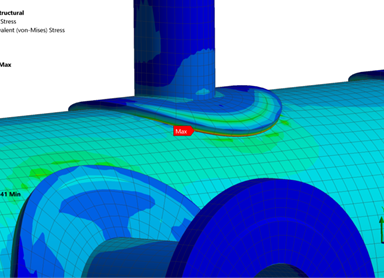
Finite Element Analysis (FEA) is a computerized method for predicting how a product reacts to real-world forces, vibration, heat, fluid flow, and other physical effects.
How FEA Works
FEA breaks down a real object into a large number of finite elements, such as small cubes or tetrahedrons. Mathematical equations help predict the behavior of each element. A computer then adds up all the individual behaviors to predict the behavior of the actual object.
Common Applications
- Stress and strain analysis
- Vibration and modal analysis
- Fatigue and durability prediction
- Thermal analysis
- Impact and crash simulation
Why Use FEA?
FEA enables engineers to:
- Identify potential failure points before physical testing
- Optimize designs for weight and performance
- Reduce the number of physical prototypes needed
- Ensure products meet safety standards
Ready to implement FEA in your design process? Contact our team for expert guidance.